Cork Whale Watch
March to November (sometimes into Winter) Preview Echtra Pick Direct Booking ↗ Cork Whale Watch
Location Guide
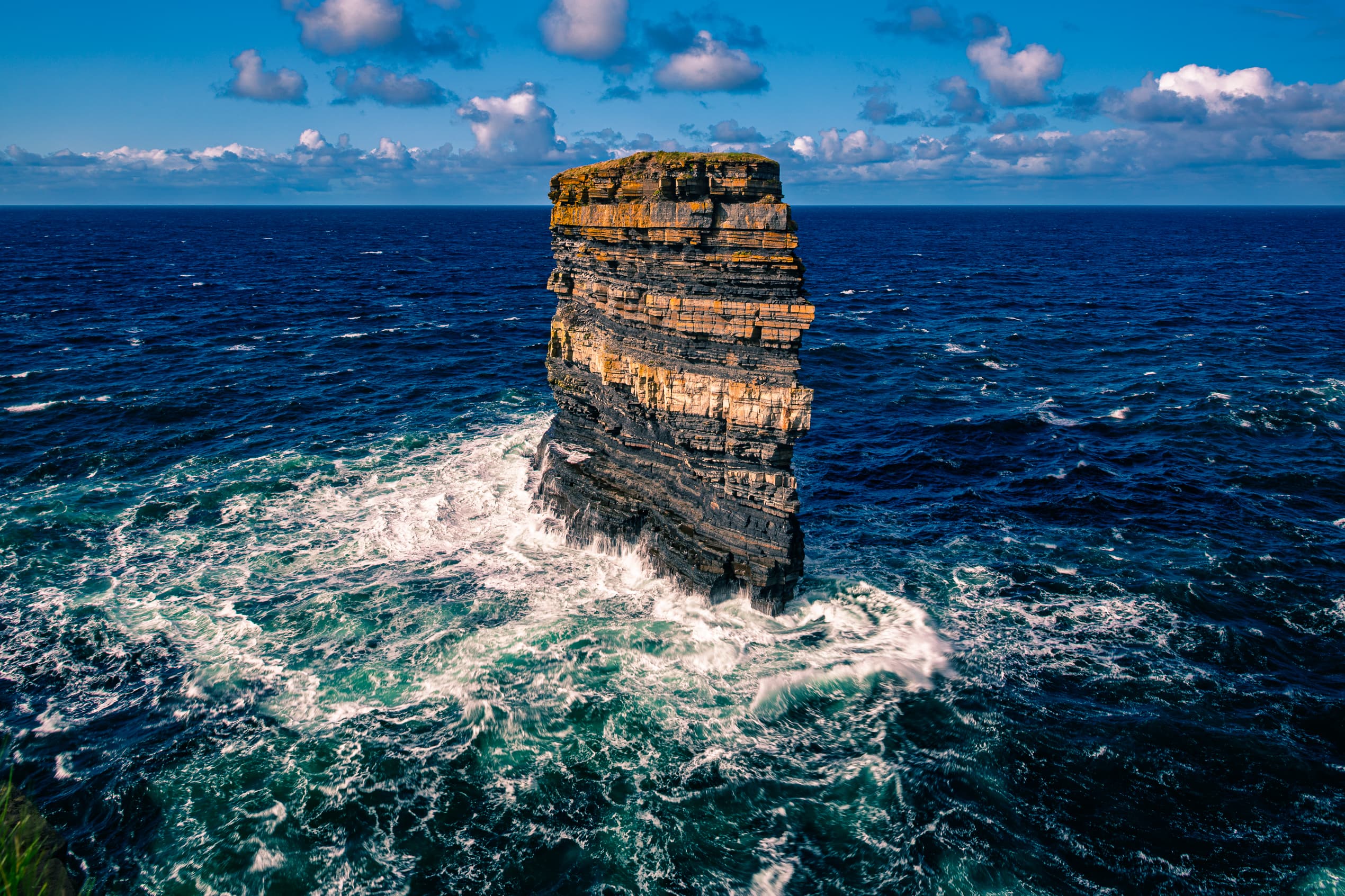
An island shaped by Atlantic weather and deep time
Dún Briste — Downpatrick Head, County Mayo
Location guide
Planning
Highlights on the map and suggested places to stay — all direct links; Echtra Echtra does not handle hotel booking.
Key spots
Where to stay
Browse by region — each panel expands in place.
Georgian Dublin — art collection, two-Michelin dining; strong base for city food tours and walks.
Wicklow Mountains foothills — estate setting, spa, and an easy pivot between Dublin, Glendalough, and the east coast.
St Stephen's Green — central for museums, Grafton Street, and evening trad sessions.
Harbour views — walk to Spanish Arch and the Latin Quarter before Connemara or Aran days.
Seafront at Salthill — promenade walks and a short hop into the city centre.
River and estate setting in Connemara — fishing, walks, and serious quiet after Galway's buzz.
Estate and Sky Garden country — exclusive-use and escapes deep in West Cork.
Five-star walled gardens in the city centre — trades as Hayfield Manor online; same property.
Estate hotel minutes from the medieval city — handy for Kilkenny Castle and the southeast coast.
Castle stay near Shannon Airport — golf, lake, and an easy bridge to the Burren and west Clare.
Wild Atlantic Way Gaeltacht — Errigal and Glenveagh within day-trip distance.
Hostel on the Causeway coast — walking distance to Ballintoy Harbour and the coastal route.
Bookable Experiences
Cork Whale Watch
Killarney Riding Stables
Atlantic Sea Kayaking
Terra Firma Ireland
Panoramic Ireland
Skellig Michael Tours

Michael B & Kenneth Casey
Wild Water Adventures
Connemara Equestrian Escapes

Hawk Walks NI
Howth Foraging
Dolphinwatch Carrigaholt
Skellig Charter Boats

Brendan Casey
North Clare Sea Kayaking Tours
Castle Leslie Equestrian Centre
Kayaking.ie
Dingle Sea Safari
Kerry Dark Sky Tourism
Mountain Ways Ireland
Paul Devane
Skellig-Michael Tour
Connemara Wild Escapes
Dingle Horse Riding
Kayakmór
Blasket Islands Eco Marine Tours
Jamie Duff
Portmagee Sea Safaris
Aloha Surf School
Atlantic Whale and Wildlife Tours
Irish Adventures
Iveragh Sea Adventures
Nealie Lyne
Emerald Outdoors
Rebelle Surf
Ballinskelligs Boat Charters
Donal McCrohan
Sliabh Liag Boat Trips
Shearwater Sea Kayaking
Jamie Knox Watersports
Fionan Murphy
Kerry Coast Cruisers
Jackie Mahon Guiding
Achill Surf & Kayak
Seanie Murphy
Island Heritage Tours
Clonanav Fly Fishing
Sceilig Sea Tours
Patrick Murphy
Green Marble Cycle Tours
Derrynane Coastal Explorers
John O'Shea
Ireland by Bike
Michael O'Sullivan
David Walsh
Wicklow Wild Foods
Willie Kennedy
Brendan Curtin
Sandra O'Connor
Planning Your Visit
Spring
Mar – May
March to May brings extraordinary light — low, sideways, constantly shifting. The bog cotton is out on the uplands. Atlantic storms give way without warning to days of complete stillness. Skellig Michael landing tours begin in mid-May.
Summer
Jun – Aug
June and July are the peak months for the Skellig crossing, puffin watching on the Blaskets, and the long Atlantic evenings when the light doesn't go until nearly midnight. The interior is emptier than the coasts — worth remembering.
Autumn
Sep – Nov
September and October are arguably the best months photographically. Lower light angles all day, turning bracken on the hills, the first Atlantic storms coming in from the southwest. Most visitor pressure has gone.
Winter
Dec – Feb
December to February: storm watching on the Wild Atlantic Way is its own kind of experience. The light when it appears is extraordinary — long golden hours at either end of a short day. Many coastal experiences close, but the landscape is at its most raw.